 Benagil Sea Cave
Best Time to Visit Benagil Cave: Month by Month
The best time to visit Benagil Cave is May, early June and late September, when the sea has settled, the shaft of light through the roof opening is working, and the cove has not yet filled up. July and August give you the most reliable weather and the worst crowding. Between November and March the coast is beautiful and half-empty, and trips get cancelled often enough that you should not plan a single morning around one. Within any day, the first departures at 07:15 and 09:00 are worth more than any month.
Quick answer
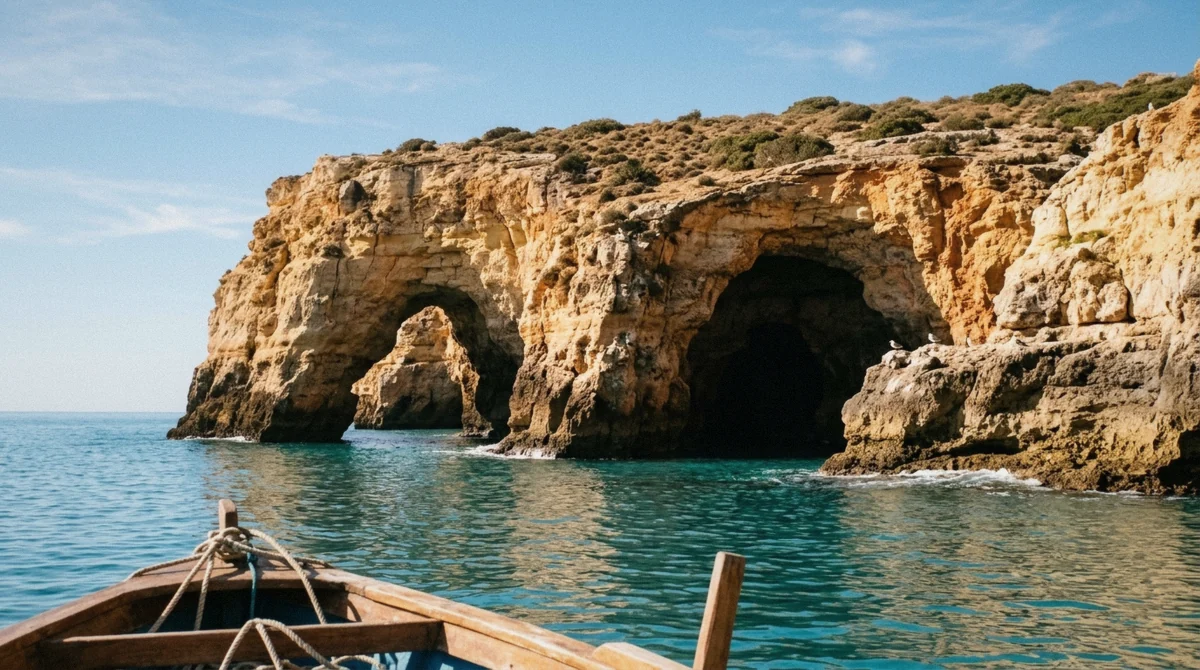
Come in May, early June or late September for the best combination of calm sea, working light and manageable crowds. July and August are the most reliable months for weather and the worst for queues, with the water outside the cave filling from about 10:30. Winter trips are cheap and often cancelled: the swell runs above the 1.5-metre threshold regularly between November and March.
Key takeaways
- Best overall: May, early June, late September
- Warmest sea: July to September at about 20 °C; coldest is February and March at about 15 °C
- The light through the opening works roughly 10:00 to 13:00 from May to October
- Trips are cancelled above about 1.5 metres of swell, and the cave closes below 1,000 metres of visibility
- Book the first free morning of your stay, never the last, so a cancellation has somewhere to go
- Whatever the month, the 07:15 and 09:00 departures beat every later slot for space
Seasons at a Glance
Conditions checked in July 2026. Sea temperatures are Portimão averages, a few minutes west along the same coast.
| Season | Air high | Sea | Cancellation risk | Verdict |
|---|---|---|---|---|
| Spring, March to May | 17 to 21 °C | 15 to 17 °C | Moderate, falling through May | Best value: light works from May, cove still quiet |
| Summer, June to August | 24 to 26 °C | 18 to 20 °C | Low | Most reliable, most crowded, book the earliest slot |
| Autumn, September to October | 22 to 26 °C | 19 to 20 °C | Low, rising in late October | Warmest water of the year and thinning crowds |
| Winter, November to February | 16 to 19 °C | 15 to 18 °C | High | Empty and cheap, but plan two possible mornings |
Spring: March to May
March and April are transitional. Air highs sit at 17 to 19 °C, the sea is at its annual coldest of about 15 to 16 °C, and Atlantic swell still shuts the coast down several days a month. What you get in exchange is a cove with nobody in it and green cliffs, because this is the only time of year the Algarve is not brown.
May is the month we would pick if someone gave us one. Rainfall drops to about 29 mm for the whole month, sunshine is up to ten hours a day, the sea has warmed to about 17 °C, and the sun is finally high enough at midday to drop a proper shaft through the roof opening. The July crowds are two months away.
Kayak trips run through spring, and the water is cold enough that most people stay in the boat rather than swimming from it.
Summer: June to August
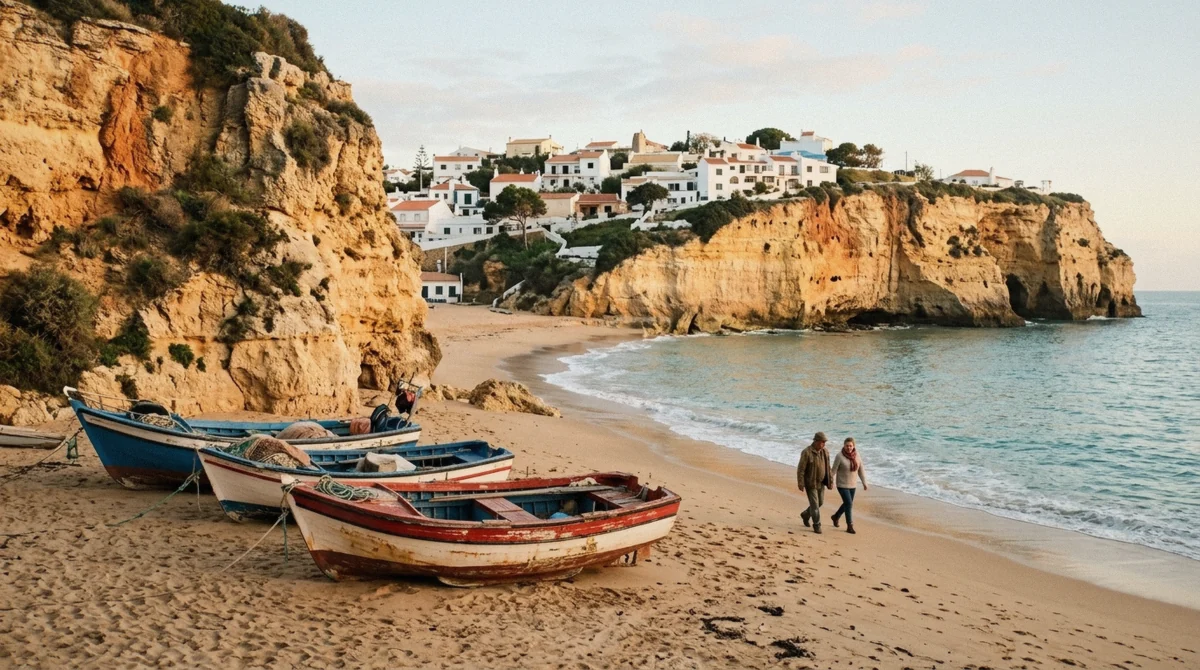
July is the driest month on this coast, with about 1 mm of rain and twelve hours of sunshine a day. August is nearly identical. The sea reaches about 20 °C, cancellations are rare, and every departure runs.
The cost is everything else. Parking at Benagil is gone by mid-morning, the kayak operators ask customers to arrive an hour before their start time in July, August and September because of it, and the water outside the cave fills from about 10:30. Inside, the limits bite hardest in these months: five motorboats and fourteen kayaks at a time, with a queue outside for the rest.
If you are here in summer, the answer is not to avoid the cave. It is to take the 07:15 or 09:00 departure and be back on the beach before the coast wakes up.
Autumn: September to October
September is the quiet argument for late travel. The sea is at its warmest of the year, about 20 °C, because the water lags the air by four to six weeks. Air highs are still around 26 °C, rain is minimal at about 15 mm, and the school holidays have ended, which visibly thins the water traffic in the second half of the month.
October is a gamble that often pays. Air highs of about 22 °C, the sea still at about 19 °C, and eight hours of sunshine a day, against 55 mm of rain and the first serious swells of the season. The light through the opening still works through October and stops being reliable after it.
Late September is our pick for anyone who can travel outside the school calendar.
Winter: November to February
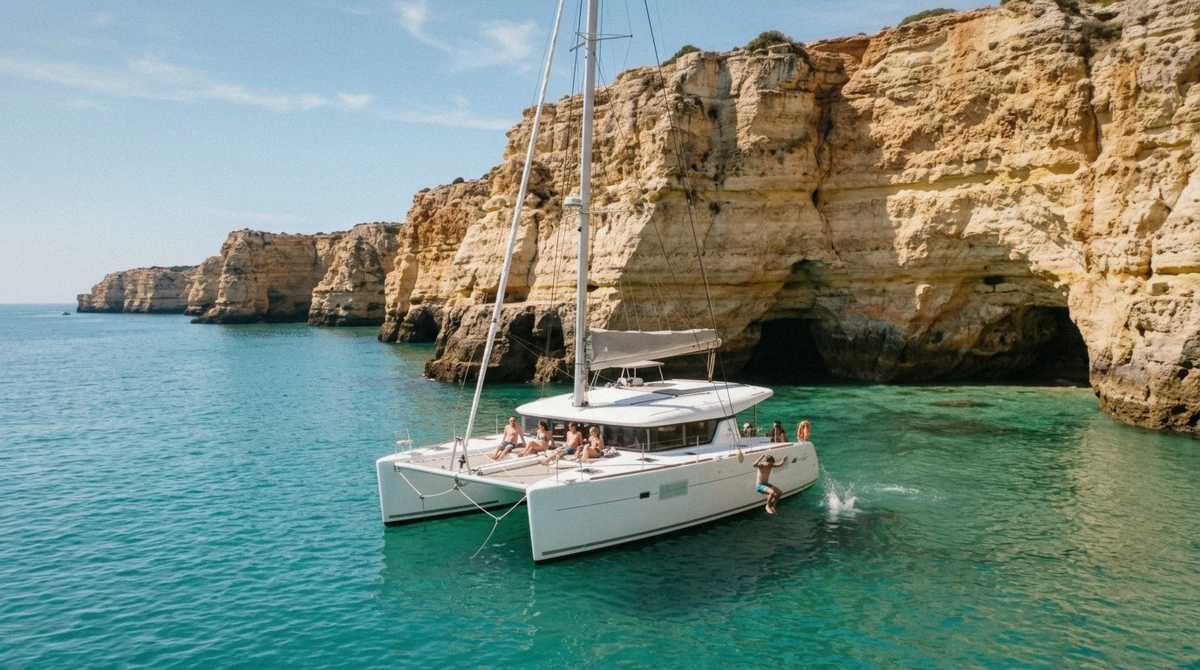
The cave does not close for winter, and neither do all the operators, but the sea has more say. December records about 99 mm of rain and five hours of daily sunshine, and the Atlantic swell crosses the operating threshold regularly.
When the sea allows it, a winter trip is the best version of this place: no queue outside, no clock pressure inside, and the low sun on the cliffs. When it does not allow it, you get a coastal cruise or a reschedule. One reviewer drove three hours each way from Lisbon in January, could not enter, and could not fit another date in.
The rule for winter is simple. Two possible mornings, or do not build the trip around the cave.
Month by Month
Averages for Portimão, the nearest town with a long climate record. Sea temperatures are monthly means, so individual days vary by a degree or two either way.
| Month | Air high | Sea | Rain | Sunshine | In one line |
|---|---|---|---|---|---|
| January | 16 °C | 16 °C | 97 mm | 5 h | Empty, cheap, frequently cancelled |
| February | 16 °C | 15 °C | 73 mm | 6 h | Coldest water of the year |
| March | 17 °C | 15 °C | 54 mm | 7 h | Green cliffs, unsettled sea |
| April | 19 °C | 16 °C | 42 mm | 8 h | Warming up, still quiet |
| May | 21 °C | 17 °C | 29 mm | 10 h | The light starts working, crowds have not |
| June | 24 °C | 18 °C | 15 mm | 11 h | Excellent early in the month |
| July | 26 °C | 20 °C | 1 mm | 12 h | Driest and busiest |
| August | 26 °C | 20 °C | 2 mm | 11 h | Peak everything, take the first slot |
| September | 26 °C | 20 °C | 15 mm | 9 h | Warmest sea, thinning crowds |
| October | 22 °C | 19 °C | 55 mm | 7 h | Last reliable month for the light |
| November | 19 °C | 18 °C | 85 mm | 6 h | Swell season begins |
| December | 16 °C | 17 °C | 99 mm | 5 h | Wettest month, plan a spare day |
What Actually Decides Whether You Go In
Rain is almost irrelevant here. What stops trips is the state of the sea and how far the crew can see.
Operators cancel when the Atlantic swell runs above about 1.5 metres, because a boat that cannot turn safely inside the chamber has no business entering it. The rules add a second trigger: nobody may enter the cave when visibility falls below 1,000 metres, which on this coast means an early sea fog can hold the fleet on the beach until it burns off, often by late morning.
The counterintuitive part is that a grey day is frequently a fine day to go. Flat grey skies usually mean no wind, and no wind means a flat sea. A bright day with a stiff westerly is the one that gets cancelled.
Best Time of Day
Two clocks run against each other here.
The light clock: the shaft through the roof opening is most direct roughly 10:00 to 13:00 from May to October, when the sun is high enough to drop through rather than skim across. Outside those hours the chamber is soft and shadowless, which is a fine photograph and not the famous one.
The crowd clock: the 07:15 and 09:00 kayak departures have easy parking and an empty cove. From about 10:00 to 10:30 in summer, the water outside the cave becomes a queue. Every reviewer who mentions timing says the same thing, and none says the opposite.
A 09:00 kayak is the compromise: you arrive with the light beginning to work and leave before the traffic. If photographs matter more than space, take a mid-morning boat and accept the company.
Best Season by Traveller
If you are chasing the shaft of light for photographs
come between May and October and book a slot between 10:00 and 13:00; see our photo guide
If you want the cave as empty as it gets
come in November or February and keep two mornings free in case the sea shuts the coast
If you are travelling with children
July to September, when the sea is about 20 °C and a swim stop is genuinely pleasant
If you are tied to the school holidays
August is fine if you take a 07:15 or 09:00 departure and book it a few days ahead
If you want the warmest water and fewer people
the second half of September beats July on both counts
If your budget decides
winter, when the $14.27 boat from Portimão still runs whenever the sea allows
If the Weather Turns
Every trip on this coast can be cancelled up to 24 hours ahead for a full refund, and operators use that window rather than sailing into a swell. When the sea is marginal rather than impossible, they usually run the coastal part of the trip and skip the cave, which some passengers enjoy and others resent.
Two habits solve most of it. Book the first free morning of your stay rather than the last. And if you are driving in from Lisbon or the Spanish border, treat a cancelled cave as a possible outcome and have the clifftop and coastal walk as the fallback, because that part never cancels.
Questions People Ask
Is it better to go to Benagil caves in the morning or afternoon?
Morning, on almost every measure. The first departures at 07:15 and 09:00 have easy parking, calm water and an empty cove, while from about 10:30 in summer the water outside the cave is busy. The one thing afternoons keep is decent light until about 13:00; after that the shaft through the opening is gone for the day.
What is the best month to visit Benagil Cave?
May if you want the best balance of calm sea, working light and space, and late September if warm water matters more. July and August are the most reliable for weather and the worst for crowding. February and November are the emptiest and the most likely to be cancelled.
Can you visit Benagil Cave in winter?
Yes, when the sea allows. Operators run through the winter but cancel when the swell tops about 1.5 metres, which happens regularly between November and March. Winter visits are the quietest of the year, with no queue outside the entrance. Keep a second morning in reserve.
How warm is the sea at Benagil?
About 20 °C from July to September, its warmest, and about 15 °C in February and March, its coldest. The water lags the air by four to six weeks, which is why September swimming beats June swimming even though the days are shorter.
How often are Benagil boat trips cancelled?
Rarely from June to September and regularly from November to March. The triggers are swell above about 1.5 metres and visibility below 1,000 metres. Every operator offers free cancellation up to 24 hours ahead, and most will reschedule rather than refund if you have days left in your trip.
What time does the sun shine into Benagil Cave?
Roughly between 10:00 and 13:00 from May to October, when the sun is high enough to fall through the roof opening instead of skimming past it. In winter the sun never gets high enough for the effect, though the cave is still worth entering.
How far ahead should I book?
A few days in July and August, especially for the early slots, which sell first. In spring and autumn the day before is usually enough. In winter, book late and watch the forecast, because the sea will decide for you anyway.
If your dates are fixed, the month matters less than the hour: an early departure in August beats a midday one in May. If your dates are open, come in the second half of September, take the 09:00 slot, and you will get the version of this place that the photographs are selling. All the trips and their timings are on Benagil sea cave trips and timings.